
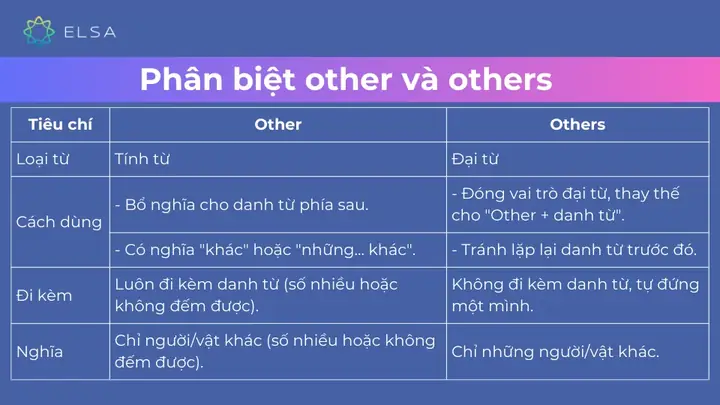
Other và another đều mang nghĩa “khác” hoặc “thêm một”, nhưng cách dùng chúng trong tiếng Anh lại có những quy tắc riêng biệt. Other thường xuất hiện như tính từ hoặc đại từ, others là dạng số nhiều của other, the other chỉ một đối tượng duy nhất còn lại trong một nhóm đã xác định, the others đề cập đến những đối tượng còn lại trong nhóm, còn another dùng để nói về một vật, người hoặc sự việc không xác định, thêm vào. Việc nắm rõ các chức năng ngữ pháp và ngữ cảnh sẽ giúp bạn lựa chọn từ đúng, tránh những lỗi phổ biến khi giao tiếp.
Tiếp theo, chúng ta sẽ giải thích chi tiết ngữ pháp và chức năng của từng từ, đồng thời đưa ra các ví dụ thực tế để minh họa sự khác nhau trong cách dùng.
Sau đó, bài viết sẽ so sánh ưu, nhược điểm của mỗi dạng trong giao tiếp hàng ngày, giúp bạn biết khi nào nên ưu tiên dùng other, others, the other, the others hoặc another.
Cuối cùng, chúng tôi sẽ hướng dẫn bạn tránh những lỗi thường gặp khi nhầm lẫn các từ này, đồng thời cung cấp những mẹo nhớ hiệu quả. Dưới đây là toàn bộ thông tin bạn cần để sử dụng chính xác “other”, “others”, “the other”, “the others” và “another”.
Có thể bạn quan tâm: Vị Trí Và Quy Hoạch Sau Sáp Nhập Xã Võ Ninh, Huyện Quảng Ninh
What does “Other” mean and when to use it?
Other là tính từ hoặc đại từ chỉ “khác” hoặc “còn lại”. Khi dùng làm tính từ, nó thường đứng trước danh từ số ít hoặc danh từ số nhiều không xác định. Khi làm đại từ, other thay thế cho danh từ đã được nhắc tới trước đó và thường xuất hiện trong các cấu trúc số nhiều.
“Other” as an adjective before singular nouns
Other as an adjective before singular nouns usually indicates an alternative item that is not the one previously mentioned. For example: “I need other options before deciding.” This usage emphasizes that the speaker is looking for a different single choice.
Cụ thể, khi other đứng trước danh từ số ít, nó thường đi kèm với mạo từ an hoặc the để chỉ một đối tượng cụ thể trong số các lựa chọn có sẵn. Ví dụ: “She chose the other apple.” Here, “the other” specifies the second apple among two.
“Other” as a pronoun for plural nouns
When other functions as a pronoun for plural nouns, it replaces a group of items that are not the ones currently being discussed. Example: “These books are interesting, but other are boring.” In this sentence, other refers to the remaining books in the collection.
Chi tiết hơn, other as a pronoun often appears after a noun phrase followed by a comma, creating a contrast: “Some students passed the exam; other failed.” This structure highlights the division between two groups.
Có thể bạn quan tâm: Khám Phá 10 Cửa Hàng Đồ Thể Thao Uy Tín Cho Người Đam Mê
How to use “Others” correctly in sentences?
Others là dạng số nhiều của other và luôn đóng vai trò là danh từ hoặc đại từ. Nó không bao giờ đứng trước danh từ; thay vào đó, others xuất hiện độc lập, thường là chủ ngữ hoặc tân ngữ trong câu.
“Others” as a subject
When others is the subject, it denotes a group of people or things distinct from the ones previously mentioned. Example: “Others think the project will succeed.” This sentence emphasizes that a different set of individuals hold a contrary opinion.
Thêm vào, others as a subject can be followed by a verb in the third‑person plural form, ensuring subject‑verb agreement: “Others have already left the meeting.”
“Others” as an object
When others functions as an object, it receives the action of the verb. Example: “She invited others to the party.” Here, others represents additional guests beyond those already listed.
Lưu ý, the verb that governs others should match the plural nature of the word, so we use “invite” rather than “invites” in the example above.
Có thể bạn quan tâm: Cách Chọn Xưởng Sản Xuất Gấu Bông Theo Yêu Cầu
When to choose “The Other” vs “Another”?
The other và another đều chỉ “một thứ khác”, nhưng chúng khác nhau về mức độ xác định và ngữ cảnh sử dụng. The other chỉ một đối tượng duy nhất còn lại trong một nhóm đã xác định, trong khi another nói về một đối tượng không xác định, thường là một lựa chọn bổ sung.
“The Other” for the remaining single item
The other is used when there are exactly two items, and one has already been mentioned. For instance: “I have two pens; I used the other one.” This sentence clarifies that the speaker refers to the second pen, the only one left.
Trong thực tế, the other can also appear in idiomatic expressions such as “the other day,” which refers to a recent but unspecified day.
“Another” for an additional, unspecified item
Another introduces an extra item that is not specifically identified. Example: “Can I have another cup of coffee?” The speaker is asking for one more cup, without specifying which one.
Ngoài ra, another can combine with nouns that are countable, and it often appears with adjectives: “another big problem.” This construction emphasizes that the problem is new and separate from previous ones.
Distinguishing “The Others” from “Other” and “Others”
The others refers to the remaining members of a known group, while other (as adjective) and others (as plural pronoun) have broader, less specific meanings. The others always implies that the group has been previously identified.
“The Others” referring to the rest of a known group
Có thể bạn quan tâm: Top 10 Cửa Hàng Mua Đặc Sản Huế Uy Tín Cho Tín Đồ Ẩm Thực
The others is used when the speaker wants to talk about the rest of a specific set. Example: “We invited John and Mary; the others will arrive later.” Here, the others points to the remaining invitees who are already known to the listener.
Cụ thể, this phrase often appears after a clause that isolates some members, creating a clear division: “Three students finished early; the others needed more time.”
Common mistakes with “The Others”
A frequent error is omitting the and saying “others” when the context calls for “the others.” For example, “I told the manager, others will follow” sounds vague; the correct form is “the others will follow,” because the speaker refers to a specific group of colleagues.
Another mistake is using the others with a singular noun, which is grammatically incorrect: “The others book is on the shelf” should be “The other book is on the shelf.”
Common pitfalls and how to avoid mixing these words
Mistake 1: Using “Other” instead of “Another” with countable nouns
Other cannot replace another when you need an indefinite additional item. Saying “I need other pen” is wrong; the correct phrase is “I need another pen.”
Cụ thể, other requires a determiner (the, an) when it modifies a singular countable noun, while another already includes the indefinite article.
Mistake 2: Dropping “the” when it’s required
When referring to a specific remaining item or group, omitting the changes the meaning. For instance, “I finished other tasks” suggests any other tasks, whereas “I finished the other tasks” indicates the exact tasks that were left.
Để tránh, always check whether the noun has been previously identified; if so, use the other or the others accordingly.
Advanced nuances and rare constructions
“Other than” for exclusion
Other than introduces an exception, meaning “except for.” Example: “Other than the rain, the event was perfect.” This phrase excludes the rain from the positive assessment.
“Another one” vs “Another”
Another one emphasizes a single additional item, often when the noun is omitted but understood: “I don’t like this shirt; give me another one.” In contrast, another can stand alone with a noun: “Give me another shirt.”
“The other … than” in formal writing
In formal contexts, the other … than can be used to compare two alternatives: “The other option than the one we discussed is less costly.” This structure is less common in everyday speech but appears in academic writing.
Regional variations in usage
Some English dialects, especially British English, may use the other more frequently when referring to a second item, whereas American English often prefers another for the same meaning. Understanding these subtle regional preferences can improve naturalness in communication.
Câu hỏi thường gặp
“Other” và “Another” có thể dùng thay nhau không?
Không, other cần một định từ (the, an) khi đứng trước danh từ số ít, trong khi another đã bao hàm “một” nên không cần thêm. Sử dụng sai sẽ làm câu trở nên không tự nhiên hoặc ngữ pháp sai.
Khi nào nên dùng “the others” thay vì “others”?
Nếu nhóm đối tượng đã được xác định rõ ràng trong ngữ cảnh, bạn dùng the others để chỉ những thành viên còn lại của nhóm đó. Khi nói chung, không xác định, others là lựa chọn phù hợp.
Làm sao để nhớ đúng “the other” vs “another” trong giao tiếp?
Hãy nhớ: the other = “cái còn lại trong một cặp đã biết”, another = “một cái nữa, không xác định”. Thực hành đặt câu với các ví dụ thực tế sẽ giúp ghi nhớ nhanh hơn.
Có nên dùng “other” trước danh từ số nhiều không?
Không nên. Other thường đi kèm với danh từ số ít hoặc dùng như đại từ số nhiều (others). Khi muốn chỉ “các cái khác” ở dạng số nhiều, dùng other kèm với than (other than) hoặc chuyển sang others.
Lưu ý quan trọng: Nội dung bài viết này chỉ mang tính chất tham khảo và cung cấp thông tin chung. Đây không phải lời khuyên chuyên môn về ngôn ngữ học. Mọi quyết định quan trọng liên quan đến việc học và sử dụng tiếng Anh nên được thực hiện sau khi tham khảo ý kiến từ giáo viên hoặc chuyên gia ngôn ngữ có chuyên môn.
Hy vọng những thông tin trên giúp bạn phân biệt và sử dụng chính xác “other”, “others”, “the other”, “the others” và “another” trong mọi tình huống giao tiếp. Nếu còn băn khoăn, hãy tiếp tục luyện tập và tham khảo thêm tài liệu ngữ pháp để nâng cao khả năng ngôn ngữ của mình.